
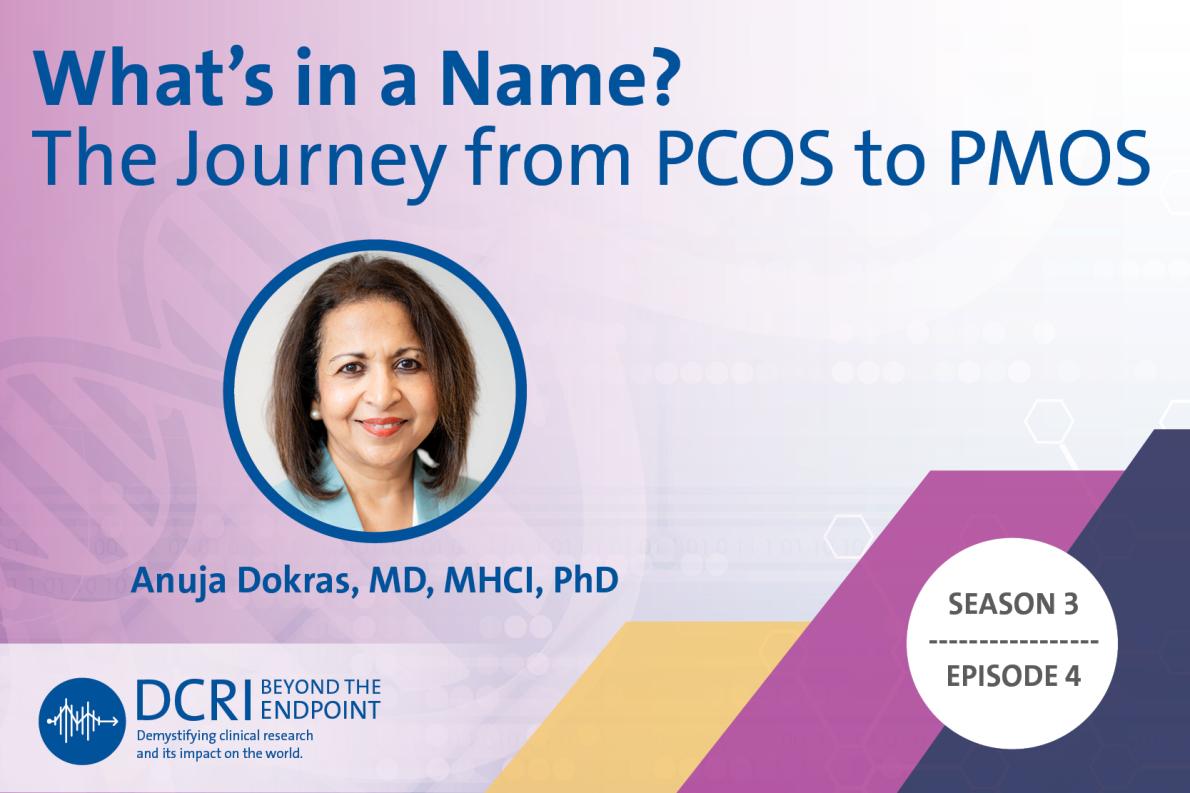
S.3 Ep. 4 | What's in a Name? The Journey from PCOS to PMOS
Streaming now on: Amazon Music | Apple Podcasts | Spotify | Soundcloud | YouTube
Learn More About Beyond the Endpoint | View All Episodes
In May 2026, polycystic ovary syndrome (PCOS), a condition affecting more than 170 million women worldwide, officially became polyendocrine metabolic ovarian syndrome (PMOS). In this episode of Beyond the Endpoint, host Emily O'Brien welcomes new co-host Daniel Edmonston, and together they speak with Anuja Dokras, MD, MHCI, PhD, a leader in the global effort behind the new name. She traces the PCOS-to-PMOS journey from a 1935 paper on “polycystic ovaries” through an NIH meeting, international evidence-based guidelines, and years of patient and clinician surveys that shaped the final name. She marvels at how quickly patients have embraced PMOS and why the old name’s focus on cysts caused fear and confusion. The conversation examines how the change could even lead to more comprehensive frontline care, less stigma, and new funding sources beyond reproductive health. Dr. Dokras also offers practical advice for clinicians on recognizing and screening for PMOS.
Related Resources
- Polyendocrine Metabolic Ovarian Syndrome: New name to improve diagnosis and care of condition affecting 170 million women worldwide (Endocrine Society)
- Polyendocrine metabolic ovarian syndrome, the new name for polycystic ovary syndrome: a multistep global consensus process (The Lancet)
- Penn PMOS Center (Penn Medicine)
About Our Guest
Anuja Dokras, MD, MHCI, PhD, is a Professor of Obstetrics and Gynecology and the Founder's Professor in Women's Health at the University of Pennsylvania. As Director of the Penn PMOS Center, she leads a multidisciplinary program that cares for adolescents and women with polyendocrine metabolic ovarian syndrome (PMOS), formerly known as polycystic ovary syndrome (PCOS), with access to nutritional, dermatological, weight management, and psychological services. Dokras has authored more than 100 peer-reviewed publications, with a focus on the long-term cardiovascular risks and mood disorders associated with PMOS, and her research has been funded by the National Institutes of Health. She is past President and current CEO of the AE-PCOS Society, an international organization supporting education and research on androgen excess disorders.