
S.2 Ep. 13 | Closing the Gap in Cardiac Arrest Survival: Why Bystanders Matter

Streaming now on: Amazon Music | Apple Podcasts | Spotify | Soundcloud | YouTube
Learn More About Beyond the Endpoint | View All Episodes
Every minute without CPR reduces a cardiac arrest survivor's chances by 10%. So what happens when an entire state decides to act? In this episode of Beyond the Endpoint, hosts Manesh Patel and Emily O’Brien discuss bystander intervention and out-of-hospital cardiac arrest with DCRI colleague Tyler Cope. He shares the implementation science efforts of the RACE-CARS trial (Randomized Cluster Evaluation of Cardiac Arrest Systems), whose work is testing whether systems-level change can move the needle on cardiac arrest survival across North Carolina. Central to that effort: a coordinated attempt to train nearly 20,000 people across 30 counties in a single day — the largest multi-site CPR training event ever attempted. Cope reflects on what it took to pull it off, and why getting more people trained may be one of the most impactful things we can do. The conversation explores barriers to bystander CPR, Good Samaritan protections, and the science of scaling life-saving skills to entire communities.
Related Links
- American Heart Association CPR & First Aid Resources (AHA, 2026)
- RACE-CARS Trial Website
- No Matter Where They Live Women are Less Likely to Get Bystander CPR (Duke, Feb. 2024)
- North Carolina 90-21.14. First aid or emergency treatment; liability limitation law (List of Statutes) (North Carolina, 2026)
About Our Guest
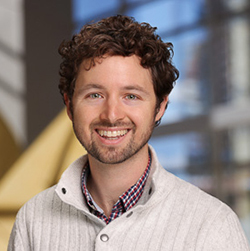
Tyler Cope, DPT, ATC, is a Clinical Research Associate at the DCRI and a key member of the Duke Implementation Science Collaborative. With over ten years of clinical experience as a physical therapist and athletic trainer, he specializes in pragmatic and implementation trials for musculoskeletal and cardiometabolic conditions. His expertise includes partner engagement, fidelity monitoring, collecting implementation outcome data, and dissemination. Cope is currently pursuing a PhD at Duke University in Population Health Sciences with a concentration in implementation science. He holds a Doctor of Physical Therapy degree and is a Certified Athletic Trainer. Cope is dedicated to improving the design and operational execution of implementation trials to enhance the clinical adoption of interventions for chronic health conditions.