
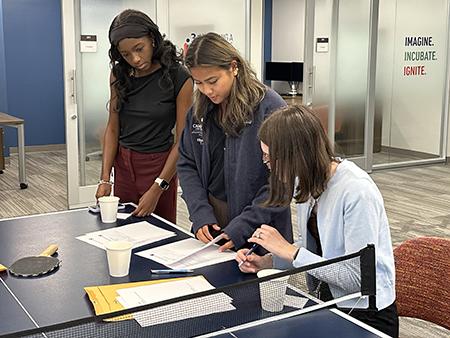
The Duke Clinical Research Institute (DCRI) recently welcomed 33 students to the 2026 Summer Training in Academic Research (STAR) Program — the largest cohort since the program’s launched in 2012.
This year’s cohort included participants from across the continental United States and, on average, was older than in previous years. Of the 33 students, 24 had matriculated into medical school, with most having recently completed their first year.
“They’re about to embark on clinical rotations and eventually residency,” explained Rachel Randell, MD, MSCR, STAR Program mentor. “Introducing them to clinical research now will significantly shape their future paths.”
STAR is a research training program for high school, undergraduate, and medical students that combines virtual and in-person instruction in research methodology and scientific writing. Guided by Duke faculty mentors, participants collaborate on original, hypothesis-driven projects that culminate in a full research paper. Since 2013, more than 95% of students have become co-authors on PubMed-indexed, peer-reviewed publications through STAR.
This year, students also engaged with an expanded pilot curriculum called STAR-Ops. Developed by DCRI operational leaders and staff, in partnership with Randell, STAR-Ops offered a behind-the-scenes look at the people, processes, and systems that drive clinical trials.
“As I shared my passion for data management and data science with such an enthusiastic and talented group of students, it was inspiring to watch curiosity come to life through our hands-on learning session and thoughtful discussions,” said Brenda Franklin-Goode, CCDM, associate director of DCRI Data Solutions. “Seeing students connect with the critical role that data plays in advancing clinical research reinforced the importance of fostering the next generation of innovators and problem-solvers in this field.”
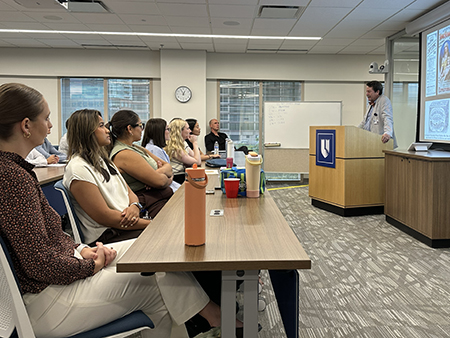
Another addition this summer was a newly designed statistics and data analysis short course, designed and taught by DCRI statisticians Carly Brantner, PhD; Taylor Krajewski, PhD; and Samia Aleem, MD, along with Samidha Shetty, PhD, of Montana State University (MSU). Participants attended a thought-provoking session with Robert Califf, MD, DCRI founder and former U.S. Food and Drug Administration commissioner, whose address motivated the dozen or so students to pursue research on misinformation and disinformation alongside him. Bradley Marino, MD, chair of Duke University’s Department of Pediatrics, also provided beneficial insights into residency pathways.
Approximately half of the student projects utilized Pediatric Trials Network data and focused on pediatric pharmacology. New topics explored women’s health, sports medicine, and dermatology.
To foster collaboration, critical thinking, and practical skills, STAR incorporated interactive activities such as a building-wide scavenger hunt, a dating-app-inspired statistician-matching game, a candy-based data management simulation, an informed-consent workshop, and a “Shark Tank”-style elevator pitch competition — a favorite among participants.
Randell, who assumed a leadership role in the program for the first time this year, said it exceeded her expectations.
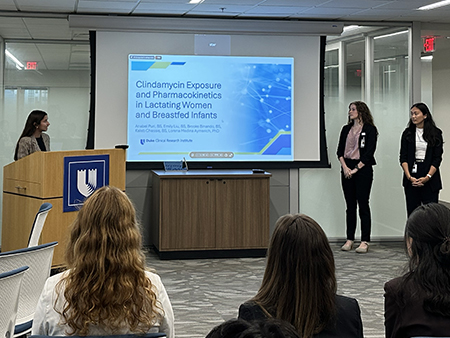
“The students’ appreciation for learning from experienced, talented staff came through clearly in their feedback,” she said. “It reinforced the idea that team science can — and should — include students.”
“I came into this program thinking that I only wanted to be a clinician,” one student wrote in the program’s feedback survey. “Now, I am much more open to becoming a researcher, public health expert, and/or an administrative official in conjunction with my clinical aspirations.”
Another participant reflected, “STAR has given me the space to think deeply about my future direction.”
STAR Program director Divinagracia Pinson has supported the program since its inception. She observed that students’ transformation often becomes evident by the final week.
“When students first arrive, you can see them questioning, ‘Am I supposed to be here?’” Pinson said. “By the end of the program, their confidence has grown so much that you wonder if you’re looking at the same person.”
STAR Program Co-Principal Investigator Danny Benjamin, MD, PhD, noted that this year’s cohort elevated the program’s standards.
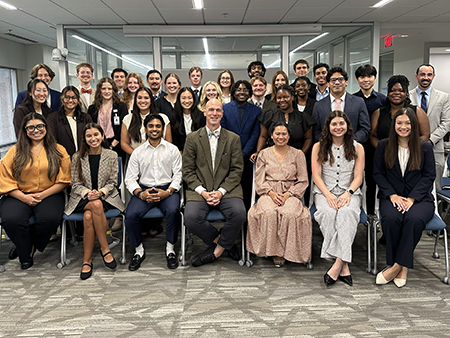
“We challenged these students more than ever before, and they responded by asking for even greater opportunities,” Benjamin said. “That’s the goal. We’re not training observers — we’re training the future leaders of clinical research.”
“We very much wanted to have the students see the intersection between traditional trainee research experiences, such as writing and analysis, operations, and clinical medicine at the bedside,” said Sarah Armstrong, MD, STAR Program co-principal investigator, who coordinated the clinical shadowing opportunities for the students.
STAR-Ops will be available to all students in future cohorts, with content tailored to each level of learner. The program’s reach has continued to expand across the country, creating increased opportunities for students to explore clinical research and position themselves as future leaders.
A current partnership with MSU brings Montana undergraduates to Durham each summer, and in 2027, STAR will expand to Marshall University in West Virginia and Cook Children’s Medical Center in Texas. A specialty track in pediatric endocrinology will also launch in 2027. Applications for next summer’s cohort will open in late September.
Learn more about the Duke STAR Program.