

Faculty from the Duke Clinical Research Institute (DCRI) brought their expertise to 65 sessions across four days at the 2026 American Heart Association (AHA) Scientific Sessions. They shared new findings and introduced innovative study designs, interpreted emerging evidence, guided discussions, and debated the field’s most pressing questions as presenters, panelists, chairs, discussants, and participants in interactive, game-show-style programming.
Their insights crossed specialties and stages of research, from heart failure, rhythm control, and stroke prevention to cardiovascular-kidney-metabolic health, vascular disease, digital health, and artificial intelligence.
The program included late-breaking primary results from the DCRI-led RACE-CARS trial, as well as late-breaking, featured science presentations from VESALIUS-CV, Test 2 Treat, and RECOVER-AUTONOMIC.
The meeting also marked a defining moment for Manesh Patel, MD, the 2026-2027 AHA president, Duke cardiology chief, and DCRI senior investigator, as he delivered the Lewis A. Conner lecture, challenging the cardiovascular community to ensure that scientific advances reach the people who need them the most.
Browse the headlines below for a selection of the insights and findings that DCRI faculty shared at the meeting.
Friday, Nov. 6
- Baxdrostat Approval Opens a New Drug Class as Heart, Kidney Outcome Trials Continue
- Why Stroke Cause May Matter for a New Approach to Prevention
- Mentors, Sponsors, and Meaningful Work Top Patel’s Advice to Early-Career Attendees
- Individualized Decisions Remain Central as Antiplatelet Options Evolve
Saturday, Nov. 7
- Initial Analysis from REFOCUS-HTN Highlights Opportunities to Improve Blood Pressure Control in Hypertension Care
- Most Non-Cardioembolic Strokes Look Mild, But the Year That Follows Often Isn’t
- Coronary CT May Not Explain the Heart Risk of Mild Kidney Disease
- Rhythm Control for Atrial Fibrillation May Offer Benefits for Brain Health
- First-in-Human Study to Test Bioengineered Human Coronary Artery for Bypass Surgery
- Stopping Statins in Older Adults Meets Noninferiority Bar, But Events Rise with Longer Follow-Up
Sunday, Nov. 8
- After ZEUS, ARTEMIS Tests IL-6 Inhibition in a More Inflamed Heart Attack Population
- Emerging Electrical Therapies Expand Options for Heart Failure Treatment
- Bystander CPR Odds Rise Late in Cardiac Arrest Trial, Survival Benefit Not Demonstrated
- Left Bundle Branch Pacing Beats Right Ventricular Pacing in Heart Block Trial Stopped Early for Benefit
- New Approaches Could Reshape Preclinical Research, but Evidence Remains Key
Monday, Nov. 9
- Shah Looks to a More Predictive, Preventive Future for Cardiovascular Care
- Making the Case for Continuous ECG in the Next Generation of Wearables
- Making AI a Priority Requires Inclusive, Validated Tools
- VESALIUS-CV Analysis Finds Evolocumab Cost-Effective for Patients at High Cardiovascular Risk Who Have Never Had a Heart Attack or Stroke
- Test 2 Treat: Site-Specific Hospital Changes Boost Cholesterol Testing, but Better Patient-Level Strategies Are Needed to Lower LDL-C
- More Intensive Support Does Not Improve Symptoms Beyond Usual Care in Long COVID POTS Trial
Friday, November 6
Baxdrostat Approval Opens a New Drug Class as Heart, Kidney Outcome Trials Continue
A new class of drugs that blocks aldosterone at its source has lowered blood pressure and albuminuria in clinical trials, but only large outcome studies will show whether it prevents heart failure, kidney disease progression, and cardiovascular death.
Robert Mentz, MD, chief of the Heart Failure Section at Duke University School of Medicine and a DCRI faculty member, reviewed the evidence at the American Heart Association’s Scientific Sessions 2026. One of the drugs, baxdrostat, received U.S. Food and Drug Administration approval in May for uncontrolled hypertension. In September, EASi-KIDNEY, a major kidney outcome trial of another medication, vicadrostat, was stopped early because accumulating data did not support a meaningful expectation of clinical benefit, according to the trial’s sponsor.
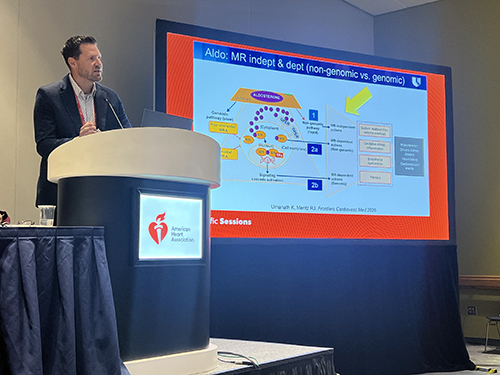
“We really need to see the full cardiovascular outcome data to best implement these into practice,” Mentz said.
Mentz said the drugs fill a gap left by angiotensin-converting enzyme (ACE) inhibitors, angiotensin receptor blockers, and angiotensin receptor-neprilysin inhibitors, which suppress aldosterone at first.
“We suppress aldosterone in the short term, but over the longer term, there’s aldosterone breakthrough in actually the majority of patients,” he said.
Mineralocorticoid receptor antagonists (MRAs), such as spironolactone and finerenone, block aldosterone at its receptor. Aldosterone synthase inhibitors act further upstream, reducing how much of the hormone the body makes. Earlier compounds in the class also suppressed cortisol, an enzyme that is more than 90% similar to aldosterone synthase.
In the roughly 800-patient BaxHTN trial, baxdrostat lowered systolic blood pressure about 9 to 10 millimeters of mercury within four weeks. An earlier trial, HALO, did not significantly lower blood pressure, with a large placebo effect and lower adherence.
About 2% to 3% of patients in the hypertension trials had potassium levels of 6 millimoles per liter or higher. Hyperkalemia, or high blood potassium, was reported as an adverse event more often in FigHTN, a phase two trial of baxdrostat that enrolled patients with chronic kidney disease, uncontrolled hypertension, and an average estimated glomerular filtration rate in the 40s.
“So, I think understanding this will be key to implementation of this therapy,” Mentz said.
Vicadrostat lowered the urine albumin-to-creatinine ratio about 40% in a phase 2 trial of roughly 600 patients with chronic kidney disease, including those taking the sodium-glucose cotransporter 2 (SGLT2) inhibitor empagliflozin.
Most of the large outcome trials enroll patients already taking an SGLT2 inhibitor. Baxdrostat and vicadrostat each have a heart failure prevention trial of more than 11,000 patients. Two vicadrostat trials, which together aim to enroll about 10,000 patients with heart failure with reduced or preserved ejection fraction, are the class’s only trials in patients who already have heart failure. Both will continue.
“We do see distinctions across different disease states,” Mentz said.
He offered a cautionary example from PARADIGM-HF. In that trial, sacubitril/valsartan increased albuminuria compared with an ACE inhibitor in patients with heart failure with reduced ejection fraction, yet it lowered mortality.
The heart failure trials should also show why enrolled patients weren’t already taking an MRA and whether hyperkalemia was the reason.
“The bottom line is we’ve got promising mechanistic insights, and now we await the big ongoing outcome studies,” Mentz said.
Why Stroke Cause May Matter for a New Approach to Prevention
A promising new approach to stroke prevention is producing very different results depending on what caused the stroke, raising questions about how treatments targeting factor XI should be used in different patient populations.
During a presentation on Nov. 6, DCRI’s Jonathan Piccini, Sr., MD, MHS, borrowed from Charles Dickens to describe it as a “tale of two cities,” contrasting results from the OCEANIC-AF and OCEANIC-Stroke trials.
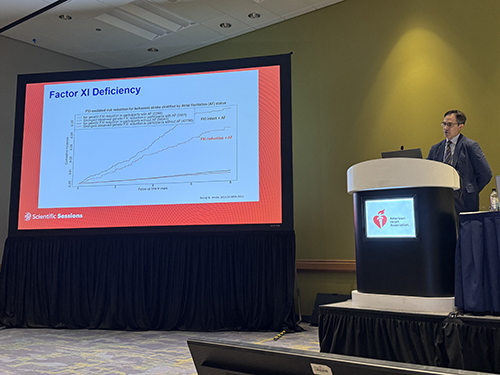
In OCEANIC-AF, the factor XIa inhibitor asundexian was inferior to apixaban for preventing stroke or systemic embolism in patients with atrial fibrillation. In OCEANIC-Stroke, however, adding asundexian to antiplatelet therapy reduced recurrent ischemic stroke by 26% compared with placebo among patients with a recent non-cardioembolic stroke or high-risk transient ischemic attack.
Piccini explored several possible explanations for the divergent results, including differences in how clots form in atrial fibrillation and atherosclerotic disease, the degree of factor XI inhibition and drug dosing. He pointed to evidence that atrial fibrillation involves blood stasis and tissue-factor-driven clot formation, while clotting associated with atherosclerotic plaque may depend more heavily on the pathway involving factor XI, potentially helping explain why inhibiting it could have different effects in the two settings.
Additional phase three trials may help determine whether the OCEANIC-Stroke findings can be reproduced and shed more light on where factor XI inhibition may be most effective, he said.
“One of the most valuable things that I have been taught is that one clinical trial is exactly just one clinical trial,” Piccini said, “and anytime you can repeat a result or get cross-validation, it’s critically important.”
Mentors, Sponsors, and Meaningful Work Top Patel’s Advice to Early-Career Attendees
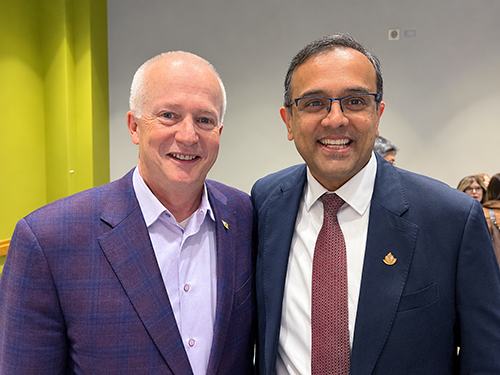
Mentorship and sponsorship serve different roles in the burgeoning stages of a career, and Manesh Patel, MD, the 2026-27 president of the American Heart Association (AHA), advised early-career attendees at Scientific Sessions 2026 to seek both.
“Mentorship is about you; sponsorship is about opportunities, and both can be taught,” said Patel, who also serves as the chief of the Division of Cardiology at Duke University School of Medicine and is a DCRI faculty member.
Speaking at the Early Career Day opening session in Chicago, Patel described a mentor as someone who builds a one-to-one relationship, gives honest guidance, and is sometimes willing to put the mentee’s goals ahead of their own. A sponsor takes action on the mentee’s behalf.
“That sponsor is opening doors and giving you visibility in things you haven’t seen,” he said. “The best mentors often do both.”
The first thing to look for in a mentor is availability, Patel said. He recalled meeting monthly with Robert Harrington, MD, a former executive director of the DCRI who now serves as the Stephen and Suzanne Weiss Dean of Weill Cornell Medicine, who asked what he was working on and why.
Beyond time, Patel said a good mentor:
- Gives honest feedback, which he has come to see as a gift
- Aligns with the mentee’s goals
- Challenges the mentee and holds them accountable
- Shows empathy when the mentee wants to try something the mentor might not choose
- Helps set short-term, intermediate, and lifelong goals
Mentees have work to do, too, he said, starting with pausing before reacting to criticism and taking responsibility for their own growth. He then encouraged the early-career attendees to find what gives them meaning.
“Life is about service and purpose,” Patel said. “Find those that want to do things you want to do, and then hopefully have fun doing it. Challenge yourself, because when it’s fun, it stops being a job. It starts becoming your profession, your career. But you’re doing something that matters, and when you really get to express yourself doing that, you get to see the benefit of providing that joy to others.”
Harrington, also a past AHA president, followed Patel’s talk with 10 leadership lessons, including one on kindness, which he called an underappreciated leadership skill. He said watching Patel’s career over many years had given him great pleasure, and that no one would be prouder of Patel’s presidential address on Sunday, except perhaps his parents.
Individualized Decisions Remain Central as Antiplatelet Options Evolve
Clinicians have more evidence than ever to guide antiplatelet therapy after acute coronary syndrome, but selecting the right drug and treatment duration still requires an individualized assessment of each patient, according to a presentation from DCRI faculty member Jennifer Rymer, MD, MBA, MPH.
Rymer reviewed evidence informing drug selection, treatment timing, and de-escalation, emphasizing that decisions must balance the risk of bleeding against the risk of another ischemic event, particularly because some factors, including chronic kidney disease, can increase both risks.
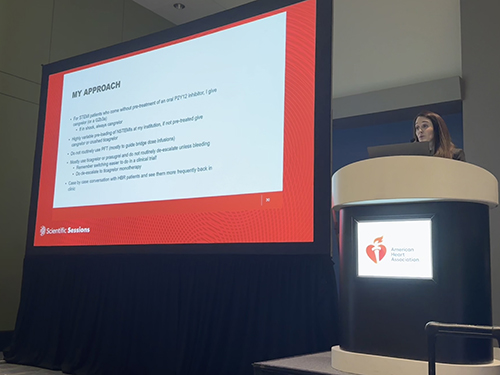
For most patients with acute coronary syndrome, high-potency antiplatelet therapy remains appropriate. However, age, a history of transient ischemic attack or stroke, bleeding risk, and the reliability of oral drug absorption can affect which therapy is chosen.
She also highlighted persistent variation in whether patients with non-ST-elevation myocardial infarction receive antiplatelet therapy before clinicians know their coronary anatomy. An analysis she shared using National Cardiovascular Data Registry information found that otherwise similar patients could have a threefold difference in the odds of pretreatment depending on the operator or institution.
Although studies support shortening or modifying dual antiplatelet therapy for some patients, Rymer cautioned that results involving one drug should not automatically be applied to another. She also noted that treatment transitions studied under controlled trial conditions may carry additional risks in routine outpatient care if they are not executed correctly.
“At the end of the day, all patients are different,” Rymer said. “What works for patient A may not work for patient B, and we need to individualize it.”
Saturday, November 7
Initial Analysis from REFOCUS-HTN Highlights Opportunities to Improve Blood Pressure Control in Hypertension Care
Despite the availability of effective medications, more than 6 in 10 patients treated for hypertension had uncontrolled blood pressure according to a real-world analysis led by DCRI faculty member Stephen Greene, MD.
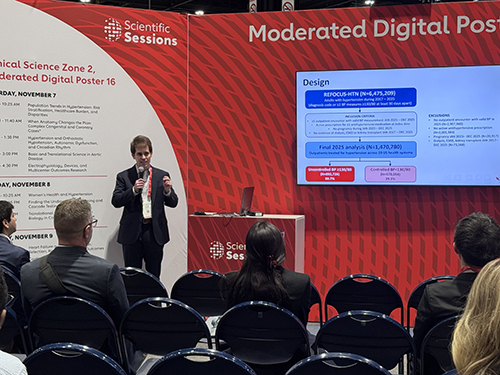
The findings are part of REFOCUS-HTN, a collaboration between AstraZeneca and the DCRI that uses real-world data to better understand gaps in hypertension care and create a foundation for further research aimed at improving care. The initiative brings together the organizations’ expertise to study blood pressure control, patterns of care and longer-term outcomes in clinical practice.
Greene presented initial analysis from the first two participating health systems in the study at the 2026 AHA Scientific Sessions.
The analysis included 1,470,780 patients with a history of hypertension who were treated with at least one blood pressure-lowering medicine. Of those patients, 60.7% had uncontrolled blood pressure, defined in the study as a reading of 130/80 mmHg or higher. The proportion of patients with uncontrolled blood pressure was similar regardless of whether patients were prescribed one, two, or three or more blood pressure medications.
Gaps in blood pressure control were seen across patient groups. Depending on demographic characteristics, insurance status, and other health conditions, 56% to 67% of patients had uncontrolled blood pressure. Rates were highest among Black patients and patients younger than 55 years old.
“Despite the availability of multiple agents, despite guidelines having strong recommendations for years, we have not made progress in getting people's blood pressure under control,” Greene said. “These initial findings from REFOCUS-HTN underscore the persistent gaps in blood pressure control, and the missed opportunities we are having in clinical practice for getting blood pressure levels where they need to be. There remains an enormous unmet need for improved care delivery and for implementation of effective therapies in clinical practice. A partnership between academia and industry is a great way to try to accomplish these goals.”
The findings highlight both persistent gaps in hypertension care and opportunities to improve how that care is delivered. Through REFOCUS-HTN, AstraZeneca and the DCRI aim to build on these initial results to better understand barriers to effective hypertension management and identify key strategies to improve care.
Most Non-Cardioembolic Strokes Look Mild, But the Year That Follows Often Isn’t
According to two nationwide analyses, most patients hospitalized with a non-cardioembolic ischemic stroke arrive with mild symptoms, yet more than a third return to the hospital and about one in five die within a year. The burden was heavier for patients whose stroke was a repeat event.
Brian Mac Grory, MBBCh, MHS, a neurology faculty member and the clinical lead for the Get With The Guidelines-Stroke Data Analytic Program, presented both studies in back-to-back moderated poster sessions Nov. 7 at the American Heart Association’s Scientific Sessions 2026.
The findings come as new options for these patients move closer to clinical practice. Bayer’s factor XIa inhibitor asundexian reduced ischemic stroke by 26% compared with placebo in the phase three OCEANIC-STROKE trial and is under priority review by the U.S. Food and Drug Administration, with a decision expected this month. China approved the drug Oct. 26, the first approval of a factor XIa inhibitor anywhere. Mac Grory’s studies did not test the drug, but they demonstrate the large size and vulnerability of its target population.
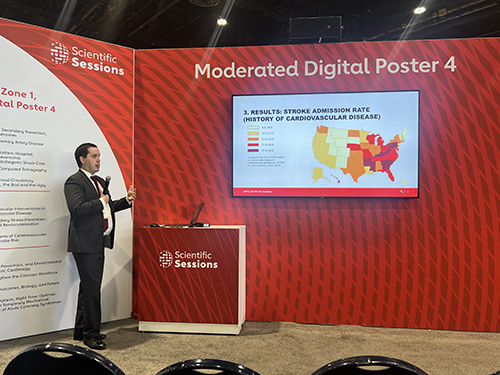
Non-cardioembolic strokes make up about 75% to 80% of ischemic strokes, Mac Grory said.
In the first study, researchers linked the American Heart Association’s Get With The Guidelines-Stroke registry to Medicare fee-for-service claims, identifying about 270,000 beneficiaries 65 and older treated at 2,349 hospitals. The median age was 77, and the median National Institutes of Health Stroke Scale (NIHSS) score was 3.
Within a year, 6.6% had another ischemic stroke and about 38% were readmitted. The recurrent stroke rate was 9.2% among patients with a prior stroke, compared with 6.2% among those without one. According to the analysis, 21.4% of all patients died within a year. Health care costs in the year after admission averaged just under $50,000.
“There was a high risk of subsequent cardiovascular events, and there was also a high economic burden with respect to time away from home, recurrent hospitalization, and economic costs,” Mac Grory said.
The second study included 1.5 million adults treated at about 2,700 hospitals from July 2019 through December 2024. Patients with a prior stroke were concentrated in the Southeast, sometimes referred to as the “stroke belt.” Overall, 6.8% died in the hospital or were discharged to hospice, rising to 7.6% among those with a prior stroke. Patients who left for a health care facility most often went to inpatient rehabilitation, followed by skilled nursing.
“Despite the initial kind of low NIHSS/low stroke severity, there was a very clear unmet need,” Mac Grory said.
The Medicare results were unadjusted, he said in response to an audience question. Session moderator Shawna Follis, PhD, noted it will be important to see whether the difference between patients with and without a prior stroke holds once researchers account for their differing characteristics. Mac Grory added that rural hospitals are underrepresented in the registry and that the claims analysis did not include Medicare Advantage members.
The in-hospital findings, he said, point to “substantial post-acute care needs, particularly among patients where the stroke is a recurrent event.”
Coronary CT May Not Explain the Heart Risk of Mild Kidney Disease
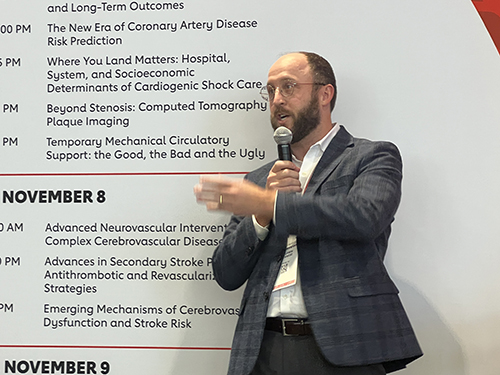
Among patients with chest pain who underwent coronary computed tomography (CT) angiography, those with mild chronic kidney disease (CKD) faced about twice the risk of death or heart attack, and that excess risk tended to be greatest in patients with the least coronary plaque.
Benjamin Catanese, MD, a nephrology faculty member at the DCRI, presented the DCRI-led PROMISE trial analysis during a moderated poster session on CT plaque imaging at a Saturday session. The excess risk may not be explained by the coronary atherosclerosis the scan shows, he said, and “mild CKD should remain a risk enhancer.”
Other recent PROMISE work offers context. A substudy published in February in JAMA Cardiology found that plaque volume on coronary CT predicted major adverse cardiovascular events across the trial’s CT arm, independent of clinical risk factors.
PROMISE, funded by the National Heart, Lung, and Blood Institute, randomized 10,003 outpatients with new symptoms, suggesting coronary artery disease to CT angiography or functional testing between 2010 and 2013. Enrollment required a serum creatinine of 1.5 milligrams per deciliter or lower, so the kidney disease in this group was mild.
Catanese’s team defined CKD as an estimated glomerular filtration rate below 60. According to the abstract, 451 of 4,400 participants with CT data, or about 10%, met that definition. They were older, more often female, and more likely to have diabetes and hypertension.
In unadjusted comparisons, patients with CKD had more coronary calcium and more total and calcified plaque. Those differences did not hold up after adjustment for age, sex, diabetes, and hypertension.
“We really saw that there was no plaque feature that was associated with mild CKD in this population,” Catanese said.
CKD was still associated with a higher risk of death or heart attack. The abstract reported a hazard ratio of 2.00 after adjustment for clinical risk factors.
When the team modeled plaque volume as a continuous measure, the CKD-associated risk was concentrated at the low end.
“We saw that at lower plaque volume, the CKD risk was higher,” Catanese said.
As plaque volume rose, the association weakened. That effect modification reached statistical significance only for a broader endpoint that added hospitalization for unstable angina, though Catanese said the signal appeared in both analyses.
He noted that PROMISE did not measure albuminuria, an independent marker of cardiovascular risk. A session attendee suggested microvascular disease, which affects both the heart and the kidney, could account for the gap. Catanese said the urine albumin-to-creatinine ratio “is a particular area that we fall short on,” especially in milder disease seen in primary care, cardiology, and endocrinology rather than nephrology.
Another attendee asked whether the results argue for stress testing to look for ischemia. Catanese said it was a great question and that patients with CKD have “different risk profiles across the spectrum,” and that as a nephrologist he would bring in cardiology colleagues to help.
Rhythm Control for Atrial Fibrillation May Offer Benefits for Brain Health
Treating atrial fibrillation to restore a normal heart rhythm may have benefits that extend beyond the heart. DCRI’s Jonathan Piccini, MD, MHS, highlighted the growing body of evidence suggesting rhythm control could improve cognitive function during a Saturday afternoon session, and shared the science coming next that could help to build on the understanding of how rhythm control affects brain health.
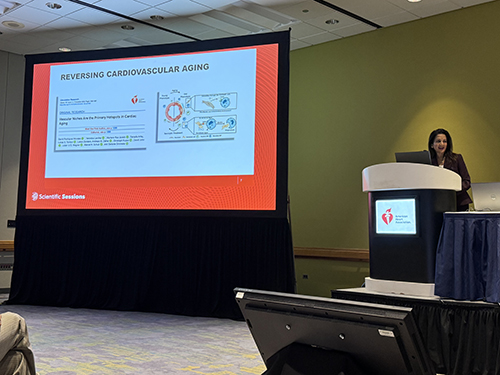
Atrial fibrillation, or AF, has been associated with cognitive impairment, dementia, and reduced brain volume, even in people without cerebral infarcts. Potential mechanisms connecting AF with brain health include changes in cerebral blood flow, vascular dysfunction, ischemia, and inflammation.
During his presentation, Piccini reviewed research examining whether restoring sinus rhythm through treatments such as cardioversion and catheter ablation could affect those pathways. The studies reported improvements in cerebral blood flow and cognitive testing following rhythm control, as well as less cortical thinning and brain-volume loss among some patients treated with catheter ablation compared with medical therapy.
“Rhythm control, in the totality of the evidence, but not all evidence, suggests that there’s an improvement in cognitive function,” Piccini said.
He noted, however, that the evidence is not uniform, and much of it remains observational. Piccini emphasized the need for prospective clinical trials specifically designed to determine whether rhythm control can preserve neurologic function and prevent cognitive decline.
Research is already exploring that relationship. The Noggin AF study, now in its final year, is comparing the effects of rhythm control with ablation versus oral antiarrhythmic medication for treating atrial fibrillation (AFib) on long-term brain health and cognitive function.
First-in-Human Study to Test Bioengineered Human Coronary Artery for Bypass Surgery
A first-in-human phase 2a study will evaluate a bioengineered human coronary artery in patients undergoing coronary artery bypass grafting, potentially taking a step toward addressing the need for an off-the-shelf conduit for bypass surgery.

DCRI’s John Alexander, MD, MHS, introduced the study design during a Nov. 7 session. The single-arm, open-label study will enroll 10 patients undergoing their first isolated coronary artery bypass grafting, or CABG, procedure at one or two centers.
“There’s no great off-the-shelf conduit for CABG surgery yet,” Alexander said, noting that the graft being tested has the potential to be a better option.
The 3.5-millimeter graft is engineered from banked vascular smooth-muscle cells grown on a biodegradable polymer mesh. The cells produce an extracellular matrix and are then removed, leaving an acellular, collagen-based vessel that does not require immunosuppression. After implantation, the graft is intended to become populated with the recipient’s own cells and remodel into a living blood vessel.
A 6-millimeter version of the technology has previously been studied in more than 600 patients in situations such as vascular trauma, peripheral arterial disease surgery, and dialysis access. Preclinical studies of the smaller graft in several animal models have provided evidence supporting its evaluation in coronary bypass surgery.
Because this is the graft’s first study in humans undergoing CABG, enrollment will proceed cautiously in staged cohorts. The first three patients will be enrolled individually, with enrollment of each subsequent patient dependent on two-month CT coronary angiography from the preceding patient showing acceptable findings.
Alexander said the team expects to enroll its first patient later this year at Rex Hospital in Raleigh.
Stopping Statins in Older Adults Meets Noninferiority Bar, But Events Rise with Longer Follow-Up
Reported during a late-breaking session on Nov. 7, the randomized STREAM trial found older adults who stopped taking statins had similar outcomes to those who continued after two years; however, rates of heart attacks, strokes, and deaths were higher in the statin discontinuation group with longer follow-up.
Karen Alexander, MD, a geriatric cardiologist and member of the DCRI, was invited to share her perspective on the findings as a discussant. Alexander is the principal investigator of PREVENTABLE, a U.S. trial testing whether starting a statin helps adults 75 and older live longer without dementia or disability.
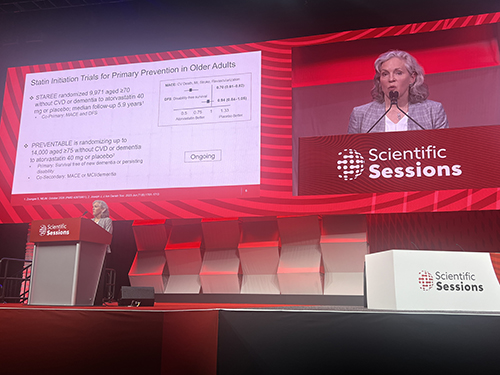
STREAM randomized 1,880 adults 70 and older at 24 sites in Switzerland, France, and the Netherlands to stop or continue their statin. At two years, people who stopped had about two fewer weeks free of heart attack, stroke, or death, well within the trial’s prespecified noninferiority margin of 5.2 weeks. Over a median follow-up of 103 weeks, 12.7% of those who stopped had one of those events, compared with 9.2% of those who continued.
The results were published simultaneously in The New England Journal of Medicine and reported by Nicolas Rodondi, MD, from the University of Bern and Inselspital, Bern University Hospital in Switzerland, the trial’s lead investigator.
Alexander opened by congratulating the investigators and participants, sharing that patients often ask whether they can stop their statins.
“No one wants to take a medicine that they’re not going to benefit from, particularly if they have multimorbidity and polypharmacy,” she said.
Evidence has been hard to build, she said, because older adults' needs differ so widely and prevention benefits take years to appear. She said observational studies of deprescribing “are hopelessly confounded and will not provide a clear answer.”
Although stopping the medication met the noninferiority test, Alexander said that it also meant less event-free time, and that event rates were higher with longer follow-up. STREAM found no significant difference in quality of life between groups.
She placed the results alongside other recent trials. A French trial, SAGA/SITE, found stopping statins in adults 75 and older was noninferior for three-year mortality, with no differences in cognition or quality of life. Statins in Reducing Events in the Elderly, an Australian trial of 9,971 adults 70 and older presented in August, found that atorvastatin 40 milligrams daily reduced major cardiovascular events by 30% compared with placebo over a median of 5.9 years. It showed a nonsignificant trend toward better disability-free survival.
Alexander said STREAM “supports continuation of tolerated statins for primary prevention in multimorbid older adults,” and that deprescribing should be selective.
“We should certainly not rush to stop statins based on this, but we should talk with our patients about their priorities,” she said.
She said evidence from STREAM, the Australian trial, and eventually PREVENTABLE will better define how much individual patients benefit from continuing or starting a statin.
PREVENTABLE, which is still enrolling, is comparing atorvastatin 40 milligrams with placebo in adults 75 and older without cardiovascular disease or dementia. Its primary outcome is survival free of new dementia or persisting disability.
Sunday, November 8
After ZEUS, ARTEMIS Tests IL-6 Inhibition in a More Inflamed Heart Attack Population
Patients in ARTEMIS, a phase three trial testing Novo Nordisk’s interleukin-6 (IL-6) inhibitor ziltivekimab after a heart attack, entered the study with more than twice the inflammation seen in ZEUS, the drug’s trial whose neutral results were presented a day earlier at Scientific Sessions.
Median high-sensitivity C-reactive protein, a marker of inflammation, was 10.3 milligrams per liter in ARTEMIS, according to baseline data presented Nov. 8 by Jennifer Rymer, MD, MBA, MHS, an interventional cardiologist and faculty member of the DCRI. Rymer presented the trial’s rationale, design, and baseline characteristics during a moderated poster session.

ZEUS, presented Nov. 7 and published in The New England Journal of Medicine, found that ziltivekimab lowered inflammatory markers but did not reduce heart attack, stroke, or cardiovascular death in patients with atherosclerotic disease and chronic kidney disease. Serious infections were more common with the drug. In September, Novo Nordisk stopped two heart failure trials of ziltivekimab, HERMES and ATHENA, after an independent data monitoring committee concluded neither was likely to produce a different result than ZEUS. ARTEMIS results are anticipated in the first half of 2027.
Whether blocking IL-6 early reduces major adverse cardiovascular events after a heart attack remains unknown, Rymer said.
ARTEMIS randomized 8,348 patients with type 1 myocardial infarction in 24 countries to ziltivekimab or placebo in addition to standard care, within 36 hours of ST-elevation myocardial infarction or 72 hours of non-ST-elevation myocardial infarction. Each patient also needed at least one enrichment criterion, such as a prior heart attack, diabetes treated with a glucose-lowering drug, chronic kidney disease, or multivessel coronary artery disease. The primary endpoint combines cardiovascular death, nonfatal heart attack, nonfatal stroke, and ischemia-driven coronary revascularization. Enrollment ran from June 2024 through December 2025.
The median time from first hospital contact to randomization and the first dose was 28.2 hours. The median age of participants was 62, and 20.7% of participants were women. About three-quarters had multivessel disease, and 96.7% underwent percutaneous coronary intervention. More than 90% left the hospital on aspirin, a statin, and a P2Y12 inhibitor. Median IL-6 was 17.2 picograms per milliliter, and median low-density lipoprotein cholesterol was 105 milligrams per deciliter.
“This was an overall sick population with multiple previous clinical comorbidities,” Rymer said.
Asked by session moderator and DCRI faculty member Nishant Shah, MD, how ARTEMIS should be viewed in light of ZEUS, Rymer pointed first to who was enrolled. “These are very different patient populations,” she said.
ZEUS tested ziltivekimab in patients with chronic kidney disease, atherosclerotic disease, and C-reactive protein of at least 2 milligrams per liter. Median C-reactive protein in ZEUS was 4.5 milligrams per liter, according to its published design paper.
Rymer said ARTEMIS enrolled patients during the acute phase of a heart attack, which brings a distinct inflammatory pattern.
“We know that there’s that early spike of inflammation, and then that chronic inflammation after an acute myocardial infarction,” Rymer said.
Emerging Electrical Therapies Expand Options for Heart Failure Treatment
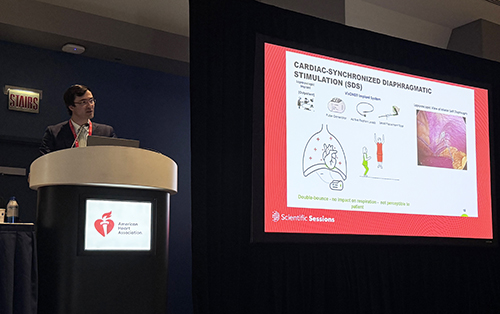
An expanding range of electrical device therapies could give clinicians new ways to address persistent symptoms and risk in patients with heart failure, but choosing the right treatment for the right patient will become increasingly important as more options emerge.
Marat Fudim, MD, MHS, reviewed advances in electrical therapies for heart failure at the American Heart Association’s Scientific Sessions, spanning cardiac resynchronization and neuromodulation to newer approaches involving diaphragm stimulation, microcurrent therapy, and splanchnic nerve modulation.
Guideline-directed medical therapy (GDMT) remains the foundation of heart failure treatment, but substantial residual risk persists, and some patients cannot tolerate all four therapies at their highest tolerated doses. Devices could provide another therapeutic strategy when medical therapy does not adequately resolve symptoms or structural abnormalities.
“Think of devices not as a bailout to traditional medicine,” Fudim said. “Think of devices as something you can hopefully go with sooner rather than later once you initiate the GDMT … and if it does not resolve symptoms or structural change to the desired degree, then a device will be your next step.”
Among emerging approaches is cardiac-synchronized diaphragmatic stimulation, which uses low-intensity electrical impulses timed to the heartbeat to stimulate the diaphragm and potentially augment cardiac filling and output. A larger U.S. randomized trial of the technology is underway following an earlier controlled study that showed improvement across several measures.
Fudim also highlighted ongoing research into baroreflex stimulation, cardiac contractility modulation, low-level microcurrent therapy and splanchnic nerve modulation. Several large or controlled trials are underway to more clearly establish which patients may benefit from these approaches and their effects on outcomes.
As the field evolves, Fudim emphasized individualized selection and sequencing. Unlike drug regimens that can be broadly applied, multiple implanted devices cannot simply be given to every patient. Instead, factors including ejection fraction, symptoms, mechanisms of congestion and response to initial treatment may help determine which device, if any, should come next.
Bystander CPR Odds Rise Late in Cardiac Arrest Trial, Survival Benefit Not Demonstrated
A community and emergency medical services program to improve response to cardiac arrest did not significantly improve survival in a four-year randomized trial across 60 North Carolina counties, though bystander CPR was more common in the intervention counties by the study’s final year.
Researchers at the DCRI, which coordinated this ambitious study that included over 22,000 people with cardiac arrest covering a population of 8.5 million people, found that 9% of patients in counties assigned to the intervention (1,048 of 11,608) survived to hospital discharge with good neurologic function, compared with 9.4% (1,017 of 10,839) in counties that kept usual care. This difference was not statistically significant (adjusted odds ratio, 0.97; 95% confidence interval, 0.75 to 1.26). More than 350,000 Americans have an out-of-hospital cardiac arrest each year, and fewer than 10% survive outside a hospital with their brain function intact.
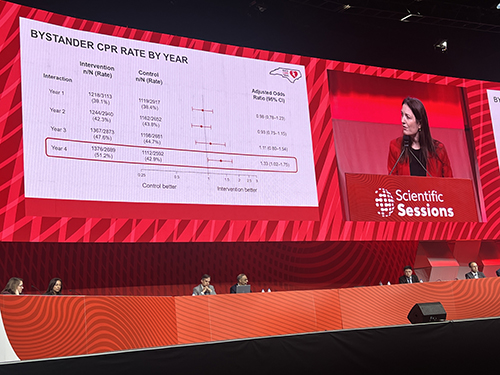
Across the full study period, bystanders performed CPR in 44.8% of cardiac arrests in program counties compared to 42.3% in usual-care counties, also a non-significant difference. Notably, the pattern changed late in the study. In the final year, the odds of bystander CPR in program intervention counties were 33% higher.
“Changing how an entire community responds to cardiac arrest is a complex, gradual process,” said first author Carolina Malta Hansen, MD, PhD, of the University of Copenhagen, who presented the results Nov. 8 at the American Heart Association Scientific Sessions in Chicago. “The late increase in bystander CPR suggests that sustained, long-term community outreach may be necessary to improve survival outcomes.”
The findings from the Randomized Cluster Evaluation of Cardiac Arrest Systems (RACE-CARS) trial were published simultaneously in the New England Journal of Medicine. Investigators described it as the largest randomized study of local and emergency medical services interventions for cardiac arrest, and the first of its scale to include rural areas. The trial was funded by the National Heart, Lung, and Blood Institute and led by Christopher B. Granger, MD, a DCRI faculty member.
Researchers grouped the counties into 55 clusters based on how local emergency medical services are governed and randomly assigned them. Twenty-eight clusters received a program that trained 911 dispatchers to recognize cardiac arrest and guide callers through CPR, taught residents hands-only CPR and how to use automated external defibrillators to reach 10% of the population, and strengthened first-responder efforts, including earlier defibrillation. The other 27 continued usual care. Using a national cardiac arrest registry, researchers enrolled all 22,459 eligible adults who had a cardiac arrest outside a hospital from July 2022 through June 2026, with outcome data for all but 12 people, evidence that this was a very high-quality trial.
Community partners held 5,724 CPR training events reaching 201,586 people, or 4.8% of residents in program counties. Defibrillation before emergency medical services arrived occurred in 13.5% of cardiac arrests in program counties and 15.3% in usual care counties. The authors cited 911 center staffing turnover, the COVID-19 pandemic, and Hurricane Helene challenges in carrying out the program. Still, they wrote, training more than 200,000 people in hands-only CPR, including in rural counties, “has not previously been reported in the United States.” They also noted that the confidence intervals around the primary result “include the possibility of modest benefit or harm.”
“This was a very ambitious project that touched the lives of millions of people in North Carolina,” said Granger. “Our team crossed the state many times, from the mountains around Asheville to the beaches of Currituck County, meeting with thousands of paramedics, firemen, sheriffs, school and church leaders, county commissioners, and survivors of cardiac arrest who benefited from the coordinated efforts of these responders.”
One of those efforts included a statewide attempt to set a world record for the most people trained in hands-only CPR in a single day on Feb. 25. Volunteer trainers from Duke and across the state taught nearly 20,000 people in 30 of the intervention counties. While the total fell short of their 30,000 goal, this still secured the U.S. record for the number of people trained in a single day. According to the American Heart Association, cardiac arrest victims who receive immediate CPR have double to triple the survival rates of those who do not.
“I always remind people that learning CPR only takes a few minutes, but in that short time it can completely change what you’re able to do in an emergency,” said Tyler Cope, DPT, RACE-CARS project manager, who coordinated the event and discussed the effort on the DCRI Beyond the Endpoint podcast.
The authors noted that “longer and more intense efforts may be needed and should be tested in future trials.” Survival to discharge regardless of neurologic status, along with disability and quality-of-life outcomes, will be reported in a later publication.
“The most important advance from the trial may be showing how this type of ambitious study can be done, in a high-quality way,” said Granger. “We have much more work to do to improve survival from cardiac arrest, and this trial has laid the basis for future research and implementation programs.”
Left Bundle Branch Pacing Beats Right Ventricular Pacing in Heart Block Trial Stopped Early for Benefit
Left bundle branch pacing lowered the combined rate of death, heart failure hospitalization, and pacing-induced cardiomyopathy compared with standard right ventricular pacing in patients with heart block in the OptimPacing trial, presented as a late breaker Nov. 8.
The trial was stopped early after a planned interim analysis showed left bundle branch pacing had met its prespecified threshold for superiority.
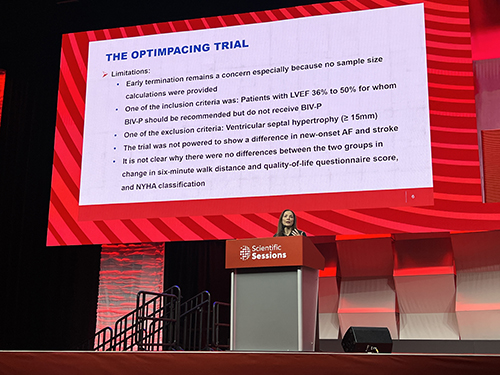
Sana Al-Khatib, MD, MHS, a cardiac electrophysiologist and DCRI faculty member, was the invited discussant on the international trial, presented by principal investigator Jiangang Zou, MD, PhD, of The First Affiliated Hospital of Nanjing Medical University. She credited the trial with addressing a clinically important question in a multicenter randomized design with long follow-up. Still, she noted that the early stop and the enrolled population limit how far the findings reach.
Investigators randomized 685 adults with atrioventricular block, a type of heart block, at 17 centers in mainland China, Hong Kong, the United Kingdom, Poland, and the United States. Over a median follow-up of 35 months, the primary outcome occurred in 8.5% of patients assigned to left bundle branch pacing and 19.2% of those assigned to right ventricular pacing, a 59% lower risk, according to an American Heart Association news release. No patient in the left bundle branch group developed pacing-induced cardiomyopathy, compared with 11.7% in the right ventricular group. The results were published simultaneously in the New England Journal of Medicine.
Cardiomyopathy caused by right ventricular pacing occurs in up to 25% of patients who receive it frequently and can lead to heart failure and atrial fibrillation, Al-Khatib said. Long follow-up matters to implanters because “we always wondered about the durability of the electrical findings, but also the outcome,” she said.
“Early termination remains a concern, especially because there was no sample size calculation provided and shared with us,” Al-Khatib said, adding that she had not yet seen the publication.
She also questioned an inclusion criterion that she said allowed patients with an ejection fraction of 36% to 50% who declined biventricular pacing, even though it would be recommended for them, and instead received conduction system pacing, which includes left bundle branch pacing.
“Why would a patient refuse biventricular pacing with more data supporting it and proceed with conduction system pacing?” she said.
The exclusion of patients with significant septal hypertrophy also raises questions about generalizability, she said.
Al-Khatib contrasted the findings with a randomized trial published in 2025 that found no significant difference in its primary endpoint. That trial compared conduction system pacing with right ventricular pacing in patients similar to those in the earlier BLOCK HF trial, which studied patients with heart block and reduced heart function. She said early termination may have exaggerated the benefit in OptimPacing, or its implanters may have been “better and more proficient, so they were able to achieve better acute and long-term results.”
She said she doubted that longer follow-up explains the difference.
“I find it hard to believe that if you didn’t show any differences in 12 months in almost anything, how you’re going to find the differences within 35 months,” she said.
Future studies should examine survival, heart failure hospitalization, arrhythmias, valvular disease, lead stability, safe lead extraction, and conduction system pacing with leadless devices, Al-Khatib said.
New Approaches Could Reshape Preclinical Research, but Evidence Remains Key
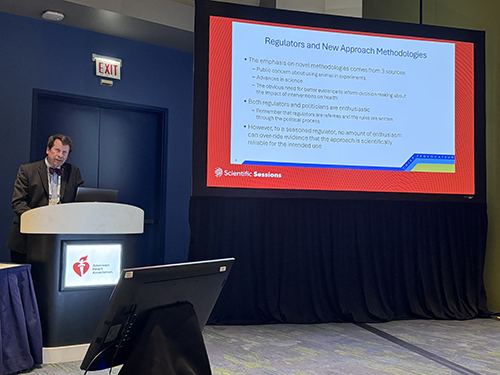
Emerging alternatives to traditional animal studies could help reshape how cardiovascular therapies are developed, but scientific rigor and evidence must guide how those methods are incorporated into regulatory decision-making, said DCRI faculty member and two-time FDA Commissioner Robert Califf, MD, during a Sunday afternoon presentation.
Califf discussed the regulatory role of new approach methodologies, or NAMs, which include nonanimal and computational methods that could reduce reliance on animal experiments. Interest in these approaches is being driven by advances in science, concerns about animal research and the need for better evidence to guide decisions about medical products.
But promising science alone is not sufficient for regulatory acceptance. Califf emphasized that a methodology must be scientifically reliable for its intended context of use, with enough expert consensus to support incorporating it into regulatory evaluation. Nonclinical findings should also be considered as part of the broader evidence about a therapy’s benefits and risks in people.
Califf endorsed the “three Rs” of animal research: replacing animal studies when appropriate, reducing the number of animal experiments and refining studies to maximize the useful information they produce. He also stressed the importance of rigorously validating and qualifying emerging alternatives.
The stakes extend beyond reducing animal use. Drug development remains highly attritional, making better evidence essential to deciding whether potential therapies should advance from one stage to the next.
For NAMs, Califf said, the opportunity is significant, but considerable work remains before their potential can consistently translate into regulatory practice.
Monday, November 9
Shah Looks to a More Predictive, Preventive Future for Cardiovascular Care
The future of cardiovascular care will rely on advances in genomics, digital health and regenerative science to identify disease earlier, intervene before it progresses and, in some cases, address disease at its biological source, according to DCRI faculty member and AHA president-elect, Svati Shah, MD, MHS.
During the session “Shaping the Future of Cardiovascular Science at Circulation: From Discovery to Impact,” Shah shared recent research to envision how cardiovascular care could become more predictive, preemptive, preventive, and personalized.
“Imagine a day when everyone’s genome gets sequenced at birth and disease risk is known, and disease prevented,” Shah said.
Shah described a 36-year-old pregnant patient with a family history of unexplained death whose progressive shortness of breath eventually led to a diagnosis of peripartum cardiomyopathy and, ultimately, heart transplantation. She contrasted that experience with a potential future in which genetic screening identifies risk earlier and remote monitoring detects changes before a patient severely deteriorates.
Research is beginning to support pieces of that vision. Shah highlighted whole-exome and long-read sequencing to improve disease detection, consumer devices that can continuously monitor health outside the clinic, and gene editing that could potentially address inherited cardiovascular disease at its genetic source.
She also explored emerging research into cardiovascular aging and regeneration. Studies suggest biological processes associated with cardiac aging may eventually become modifiable and that, under certain conditions, the adult human heart retains the potential to regenerate. These findings remain early evidence rather than established clinical therapies.
But scientific discovery alone, she emphasized, will not transform care. Echoing current AHA President and DCRI faculty member Manesh Patel, MD’s Lewis A. Conner Lecture given on Sunday, Shah noted that realizing that future also will require health systems to close the implementation gap so validated innovations reach the patients who need them.
Making the Case for Continuous ECG in the Next Generation of Wearables
Wearable heart monitors are here to stay, and the next wave will rely on the heart’s electrical signal and continuous recording instead of occasional spot checks.
Jonathan Piccini, MD, MHS, a cardiac electrophysiologist and DCRI faculty member, made that case in a talk on wearables during the “Future of Arrhythmia Care” session at the American Heart Association’s Scientific Sessions 2026.
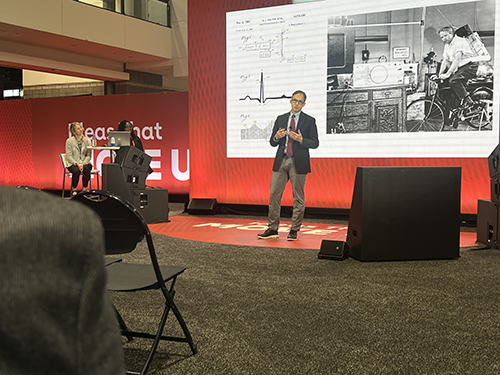
“Wearables are a significant evolutionary step in the field,” Piccini said. “They are not a gimmick. They are not a transient thing that we are experiencing. They will change how we deliver our clinical care.”
He began by looking back to 1962, when the patent application for the first Holter monitor was filed, and showed a photograph of inventor Norman “Jeff” Holter wearing his bulky prototype. Ambulatory monitors shrank over the following decades, and Piccini said the field has now entered a “golden age” of devices built into things people wear every day.
He pointed to the Apple Heart Study, which showed that a smartwatch’s light-based pulse sensor could screen for atrial fibrillation with reasonable positive predictive value. In that study of 419,297 participants, 84% of irregular pulse notifications coincided with atrial fibrillation on a simultaneously worn electrocardiogram (ECG) patch.
Piccini argued that single readings miss much of what matters.
“No one reads a book by reading a single page, closing it, putting it away,” he said.
Continuous measures, he said, provide much better prognostication, enable treatment decisions, and simplify long-term management.
Developers are now targeting almost every part of the body.
“If you can name a body part or a piece of technology in your home, someone is probably trying to record an ECG,” Piccini said.
His examples included an upper-arm device that records continuously, an in-ear device that could also serve as a hearing aid, and, “perhaps most shockingly,” several ECG technologies built into toilet seats, which he said may provide actionable tracings for patients in settings such as assisted living facilities.
He also highlighted work by electrophysiologist Zak Loring, MD, MHS, also a DCRI faculty member, testing a chest patch that combines ECG with sensors for chest vibration and heart sounds. The patch estimates diastolic filling time, pre-ejection period, and left ventricular ejection time, offering a window into the heart’s mechanical function.
Light-based sensors and direct ECG recording each have strengths and limitations, but Piccini predicted that the heart’s electrical signals will drive the field forward. Pulse-based sensing will fade in importance, he said, though “there will always be a place for it.”
Asked about privacy and anxiety, Piccini said both deserve attention, along with signal quality. He said that a recording with large gaps can’t be considered continuous.
“I think the anxiety piece is a real thing,” he said.
He said clinicians should present wearables as tools patients can reach for when they feel unwell or need help, not something that dominates their day.
Making AI a Priority Requires Inclusive, Validated Tools
Artificial intelligence will help cardiologists predict and prevent bad outcomes only if humans maintain oversight and the data behind it includes the patient population it will be used on, a leading electrophysiologist told clinicians.
Sana Al-Khatib, MD, MHS, a DCRI faculty member, spoke on AI ethics, equity, and governance in a session on AI in electrophysiology. Al-Khatib is also president of the Heart Rhythm Society (HRS), which recently named AI one of its strategic priorities for the next five years.

She shared the plan with members at a virtual town hall on Nov. 9. The society wants to prepare members to bring AI into their workflows, and professional societies “can play a pivotal role” in educating clinicians about which tools are valid, she said. In September, the HRS also published a scientific statement on a framework for integrating AI into clinical electrophysiology workflows.
For Al-Khatib, the greatest clinical opportunity is preventing sudden cardiac death. The incidence is greatest in high-risk groups such as patients with heart failure, but the largest absolute number of deaths occurs in people who don’t appear to be at increased risk.
“This particular paradox has actually challenged us for decades, and we still haven’t solved it,” she said. “AI, I think, will help us solve this issue.”
That promise depends on what goes into the models. AI does not weigh the quality of its data sources, Al-Khatib said, and minority groups are often missing from the data used to develop algorithms.
“If the input is inaccurate, the output is going to be equally inaccurate,” she said.
Drawing on a 2024 paper she co-authored on AI bias in clinical practice, in which she urged developers to include underrepresented groups, define a model’s task precisely, report how models were built and trained, and validate them internally and externally.
Among the AI ethics principles of the United Nations Educational, Scientific and Cultural Organization, she stressed human oversight.
“If we have the right oversight and determination by humans, the likelihood that AI will take over in a rampant way, I think, would be very low,” Al-Khatib said. “We also have to ensure that we continue to be the masters in delivering great care, assisted by AI,” she said.
Practical barriers remain. The tools are expensive, and clinicians need time to learn them. Each site must also maintain the algorithms and update them as new data arrive, which adds work for informatics teams. Reimbursement that covers those costs would help, she said.
Asked about the many bodies weighing in on AI oversight, including the Food and Drug Administration and the Coalition for Health AI, Al-Khatib called alignment across those bodies “incredibly important, so that we’re sending the same message.”
“The vision is that we work most effectively with AI to help us predict and prevent bad outcomes most accurately and deliver the best care possible,” she said.
Targeting Inflammation in PAD Shows Promise, but Questions Remain
There’s an established association between inflammation and peripheral artery disease (PAD), but whether targeting inflammatory pathways can meaningfully improve cardiovascular and limb outcomes remains an important question.

Jennifer Rymer, MD, MBA, MHS, reviewed evidence linking inflammatory biomarkers with PAD progression, functional decline, and cardiovascular and limb outcomes, as well as emerging approaches to target inflammation and research evaluating their clinical impact. She also emphasized an important distinction: An intervention’s ability to reduce inflammatory markers does not necessarily mean it will improve the outcomes that matter to patients.
“While there’s a lot of excitement in this space, we need to make sure we understand what it actually accomplishes with CV outcomes,” Rymer said.
That uncertainty is driving research into several approaches to modifying inflammation in vascular disease. Rymer discussed evidence involving pathways including IL-1 and IL-6, NLRP3 inflammasome inhibition and treatments such as colchicine, noting that results to date illustrate both the potential of targeting inflammation and the need for more definitive outcomes data.
Among the ongoing studies Rymer highlighted was LEADER-PAD, an international randomized trial evaluating whether low-dose colchicine can reduce cardiovascular and limb events in patients with symptomatic PAD. The trial is expected to enroll approximately 6,200 people and includes patients with intermittent claudication, chronic limb-threatening ischemia, and previous revascularization.
Together, the evidence points to inflammation as a potentially important therapeutic target in PAD while emphasizing the next challenge for the field: determining which strategies can translate biological effects into meaningful benefits for patients.
Fat Drives Cardiovascular-Kidney-Metabolic Disease Long After Diagnosis
Excess and dysfunctional fat tissue, the entry point to cardiovascular-kidney-metabolic (CKM) syndrome, continues to drive the disease after heart or kidney complications appear and should be treated at every stage, said Jennifer Green, MD.
Green, a DCRI faculty member, gave the endocrinologist’s perspective during a Nov. 9 session on breaking down silos in CKM care. She urged clinicians to look past body mass index (BMI) and intervene earlier without losing sight of patients whose disease has already advanced.
“Adipose tissue is not just sitting there; it’s not just a cosmetic issue,” Green said.
Fat cells are endocrine cells, she said. When adipose tissue is excessive and dysfunctional, it secretes more pro-inflammatory molecules such as leptin and interleukin-6, and less of the anti-inflammatory hormone adiponectin. The result is a pro-inflammatory, pro-oxidative state that damages blood vessels, the heart, the kidneys, and the liver. If sustained, it can lead to fibrosis. Around the organs, these molecules can act directly on neighboring tissue without traveling through the bloodstream, she said.
Green highlighted one pathway with particular relevance for heart failure. Persistently high leptin levels increase aldosterone synthesis and secretion in the adrenal glands, and dysfunctional fat itself expresses mineralocorticoid receptors, so the higher aldosterone levels keep stimulating the fat cells. Those levels generally don’t reach what clinicians look for when screening for primary aldosteronism, she said.
“However, what it does result in is a degree of aldosterone presence or activity that is inappropriate for the amount of salt that is taken in on a daily basis,” she said.
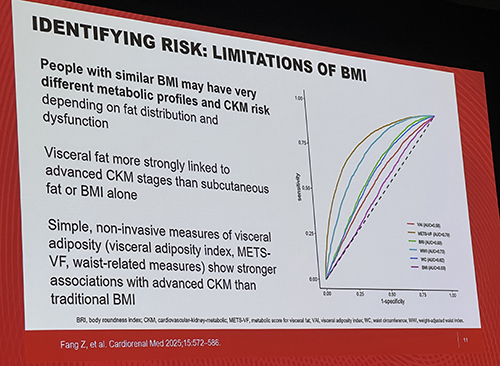
Green called BMI “a relatively crude instrument,” because people with similar values can have very different fat distribution and metabolic risk. She encouraged clinicians to consider easily calculated measures of visceral fat, which she said show stronger associations with advanced CKM than BMI alone. She cited a 2025 analysis of national survey data in which the Metabolic Score for Visceral Fat, which uses routine labs, body measurements, and age, had an area under the curve of 0.79 for identifying advanced CKM, compared with 0.53 for BMI, where 0.5 is no better than chance.
Targeting excess fat improves outcomes in type 2 diabetes, obstructive sleep apnea, metabolic dysfunction-associated steatohepatitis, and heart failure with preserved ejection fraction whether through medication, sustained lifestyle change, or metabolic and bariatric surgery.
Most of the evidence for CKM therapies comes from patients at high risk, Green said, because testing interventions in lower-risk groups is difficult. But she stressed that intervening early will not benefit at-risk individuals.
Green pointed to the American Diabetes Association’s recommendation that clinicians caring for people with type 1 or type 2 diabetes consider measuring natriuretic peptides to find stage B heart failure, structural or functional abnormalities that fall short of a clinical diagnosis, before symptoms develop. She concluded that although early intervention matters, clinicians must continue to address metabolic drivers in patients at all CKM stages.
VESALIUS-CV Analysis Finds Evolocumab Cost-Effective for Patients at High Cardiovascular Risk Who Have Never Had a Heart Attack or Stroke
Evolocumab, a cholesterol-lowering medication used to reduce cardiovascular risk, was shown to be cost-effective for people at high risk for cardiovascular disease who had not previously had a heart attack or stroke, according to a new economic analysis of the VESALIUS-CV trial.
Daniel Mark, MD, presented the findings during a Monday afternoon session. Researchers found that the benefits associated with evolocumab represented good value based on current AHA/American College of Cardiology (ACC) benchmarks for cost-effectiveness when the medication’s costs were weighed against projected gains in length of life.
The trial included 12,257 patients who were at high risk for cardiovascular events but had no history of heart attack or stroke. Earlier results showed that evolocumab reduced major cardiovascular events and all-cause mortality rates compared with placebo. Over a median follow-up of 4.6 years, evolocumab reduced the risk of coronary heart disease death, heart attack, or ischemic stroke by 25%. All-cause mortality, a secondary endpoint, was reduced by 20%.
The new analysis examined whether those clinical benefits also represented good value within the U.S. health care system. Researchers used patient-level data from VESALIUS-CV to estimate medical costs and how treatment could affect patients’ length of life.
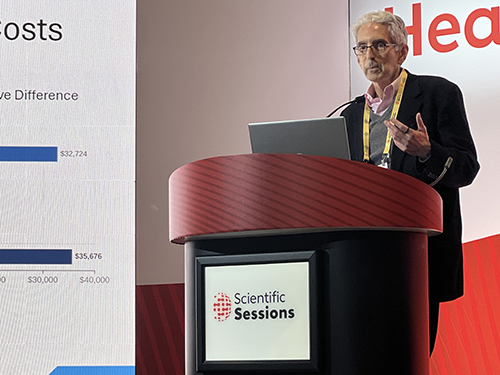
Compared with placebo, evolocumab was projected to add an average of about six months of life per patient while increasing lifetime care costs by approximately $35,700. Researchers estimated that the cost for each additional quality-adjusted life-year (QALY) gained with the evolocumab strategy was $76,762. In 91% of the statistical simulations conducted, that figure fell below the $120,000-per-QALY AHA/ACC value benchmark used by the researchers.
“When a treatment reduces cardiovascular events and helps patients live longer, the next question is whether those benefits represent good value for patients and the health care system,” Mark said. “This analysis shows that, at current benchmarks, the additional benefits of evolocumab are worth the additional cost.”
The independent analysis was led by the DCRI in collaboration with the TIMI Study Group as part of the Amgen-funded trial.
The researchers noted that the economic findings depend on the price of evolocumab and assumptions about how long its survival benefit persists. The primary analysis assumed that the relative mortality benefit observed in VESALIUS-CV would persist for 15 years and then gradually diminish over the following five years.
Learn more about the VESALIUS-CV economic analysis here
Test 2 Treat: Site-Specific Hospital Changes Boost Cholesterol Testing, but Better Patient-Level Strategies Are Needed to Lower LDL-C
After a heart attack or stent procedure, lowering low-density lipoprotein cholesterol (LDL-C), often known as "bad" cholesterol, reduces the chance of another event. Even so, many of these patients never have their LDL-C checked, and their treatment often isn't adjusted when levels stay high. The Test 2 Treat trial found that two approaches designed to close those gaps improved some aspects of cholesterol care, particularly testing, but did not significantly lower LDL-C levels overall.

DCRI faculty member and Test 2 Treat investigator Nishant Shah, MD, presented the results during a late-breaking featured science session on Nov. 9. The trial evaluated two programs to improve lipid management in adults hospitalized for a heart attack (myocardial infarction, or MI) and/or a percutaneous coronary intervention (PCI) during their transition from the hospital to outpatient care.
The first program used hospital-wide changes at five U.S. health systems. Each site reviewed where its own care was falling short and then made workflow changes. Examples of changes included adding a lipid panel to admission and catheter lab order sets, electronic health record reminders, pharmacist support, and weekly email reminders. The study compared about 3,800 patients treated in the six months before and after the changes. Inpatient LDL-C testing rose from 53.8% to 65.4%, representing a statistically significant increase. However, the share of patients with LDL-C of 70 mg/dL or higher whose cholesterol-lowering therapy was increased before discharge did not change.
The second program was a randomized trial of 400 patients with LDL-C of 70 mg/dL or higher. It tested a six-month "care champion" against usual care and patient education. Patients in both groups received cholesterol education materials. Care champions did not prescribe medication, but they checked in by phone remotely at set times during the six-months following the event. They encouraged patients to take their medicine, arranged follow-up blood tests, and communicated with patients' outpatient clinicians.
The primary outcome of the second program, change in LDL-C over 6 months post-discharge, was not significantly different between groups. There were, however, some improvements in processes of care: Patients with a care champion were more likely to have their LDL-C checked within six months after discharge (67.5% vs. 54.5%). Among patients tested with a high LDL-C during follow-up, they were also more likely to have their therapy increased. However, in both groups, more than a third of patients had no follow-up LDL-C test despite attempts made to contact patients and clinicians to obtain a lab order.
“These results suggest that more work is needed to determine how best to get a patient’s cholesterol to goal after a hospitalization for a cardiovascular event,” Shah said. “Perhaps, an alternative strategy would be to introduce a care champion that could both order and prescribe lipid-lowering therapy outside of clinician visits to get patients to goal sooner, rather than waiting for these labs or prescriptions to be placed from another provider.”
The research indicates that strategic, patient-level approaches are needed to meaningfully lower LDL-C after a major heart event.
More Intensive Support Does Not Improve Symptoms Beyond Usual Care in Long COVID POTS Trial
An intensive, coordinated program supporting recommended lifestyle measures for patients with long COVID postural orthostatic tachycardia syndrome (POTS) did not improve patients’ symptoms compared with providing them the same recommendations without the ongoing support, according to new results from the RECOVER-AUTONOMIC trial.
POTS is a disorder of the autonomic nervous system characterized by an excessive increase in heart rate when standing. It can cause dizziness, fainting, fatigue, difficulty thinking, and exercise intolerance, making everyday activities difficult for people with the condition. It affects roughly 30% of people with Long COVID.
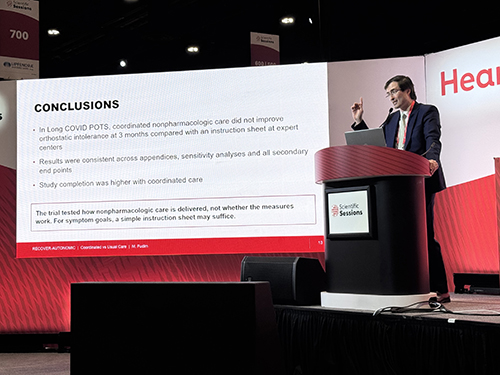
DCRI’s Marat Fudim, MD, MHS, presented the findings of the new analysis, which included 381 adults with long COVID POTS enrolled across two concurrent study designs within the RECOVER-AUTONOMIC platform: one evaluating IVIG versus a placebo, and the other evaluating ivabradine versus placebo. Within each, participants were randomly assigned to receive either coordinated or usual nonpharmacologic care for three months.
All participants received recommendations that included increasing fluid and salt intake, using compression garments, performing physical counter-pressure maneuvers, and following activity guidance. Participants assigned to coordinated care also received weekly telehealth sessions with a trained care coordinator, personalized guidance, home monitoring devices, an activity tracker, a logbook, and an under-desk exercise bicycle. Those receiving usual care received a one-page summary of the same general recommendations without structured follow-up.
After three months, symptoms had improved in both groups, but researchers found no significant advantage from the more intensive approach. The primary symptom score improved by 1.2 points among participants receiving coordinated care and by 1.4 points among those receiving usual care. Researchers also found no advantage for coordinated care across secondary measures of symptoms, heart rate, walking distance, physical function, or quality of life.
“These findings help us distinguish between what care patients receive and how intensively that care needs to be delivered,” Fudim said. “Providing substantially more support and resources did not further improve symptoms, which is important information for patients and clinicians as we work to identify effective, practical approaches to managing long COVID POTS.”
The results add another dimension to RECOVER-AUTONOMIC findings presented at ACC.26. In that analysis, the heart rate-lowering medication ivabradine successfully reduced heart rate but did not significantly improve POTS symptoms when used alone.
A secondary analysis suggested a potential benefit when ivabradine was paired with coordinated care, although the new paper notes that differences related to the combination of drug assignment and care approach should be considered hypothesis-generating until replicated.