
S.2 Ep. 7 | From Provider to Patient: A Dual Perspective on Colorectal Cancer

Streaming now on: Amazon Music | Apple Podcasts | Spotify | Soundcloud | YouTube
Learn More About Beyond the Endpoint | View All Episodes
Colon cancer doesn’t just impact older adults. Increasingly, it's striking people in their 30s, 40s, and 50s—sometimes with little to no warning. In this episode of Beyond the Endpoint, hosts Manesh Patel and Emily O'Brien explore the rising incidence of colorectal cancer through two perspectives. First, they speak with Duke emergency physician Ajay Kohli, who was diagnosed with colon cancer at age 42—just one weekend after running a half-marathon. Kohli shares his unexpected journey from dismissing vague symptoms to emergency surgery and chemotherapy, and reflects on how the experience transformed both his approach to health and his practice as a physician. Later, Duke gastroenterologist Julius Wilder discusses the science behind these trends, updated screening guidelines, and research aimed at improving access. Wilder also addresses common questions about symptoms, risk factors, and the flood of gut health products trending on social media.
Related Links
- Young and at Risk for Colorectal Cancer (Duke Today)
- Ultraprocessed Foods Linked to Colorectal Cancer Risk in Women Under 50 (NYTimes)
- Long-distance runners may face higher colon cancer risk, early findings suggest (BBC Science Focus)
- Guideline for Colorectal Cancer Screening (American Cancer Society)
About Our Guests
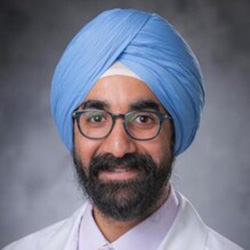
Harajeshwar Singh (Ajay) Kohli, MD, JD, MIA, FAAEM, DipABLM, is an Assistant Professor in the Department of Emergency Medicine at Duke University. As both a physician and a patient, Kohli brings a unique dual perspective to discussions about colorectal cancer. His personal journey with colorectal cancer began in 2021 when, despite being only 42 years old, active, and healthy, he experienced severe abdominal pain that led to a colonoscopy revealing a tumor, even though his bloodwork and CT scan had appeared normal. After a challenging recovery from cancer surgery and chemotherapy, Kohli fulfilled a personal promise by returning to run the same half-marathon he had completed just before his diagnosis—a tradition he has maintained every year since. Through his experience as both a healthcare provider and patient, he offers invaluable insights into the importance of early detection and persistent follow-up for colorectal cancer, particularly as rates rise among younger adults. Beyond his clinical practice, Kohli serves as faculty for several medical school courses, including Clinical Skills and Foundation, Social and Structural Drivers of Health, and the Inter-professional Education Clinic.
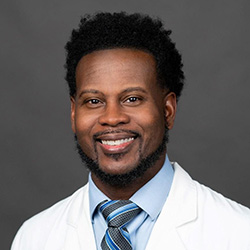
Julius M. Wilder, MD, PhD, is a gastroenterologist and medical sociologist who serves as Associate Professor of Medicine and Sociology at Duke University. As a nationally recognized expert in healthcare access research and a DCRi faculty member, Wilder leads important work examining social determinants of health in gastroenterology and hepatology, focusing on improving access to liver transplantation and colorectal cancer screening rates across populations. His influential research on disparities in colon cancer screening in North Carolina has highlighted critical gaps in healthcare access and shaped community-based intervention strategies. Wilder advocates for cost-effective, accessible screening options, noting that tests like FIT provide reliable results at lower costs, potentially improving access for all patients. As a leader at Duke, he translates his unique training as the first MD/PhD in Medical Sociology from Duke into practical approaches to overcome barriers in healthcare delivery and improve patient outcomes.